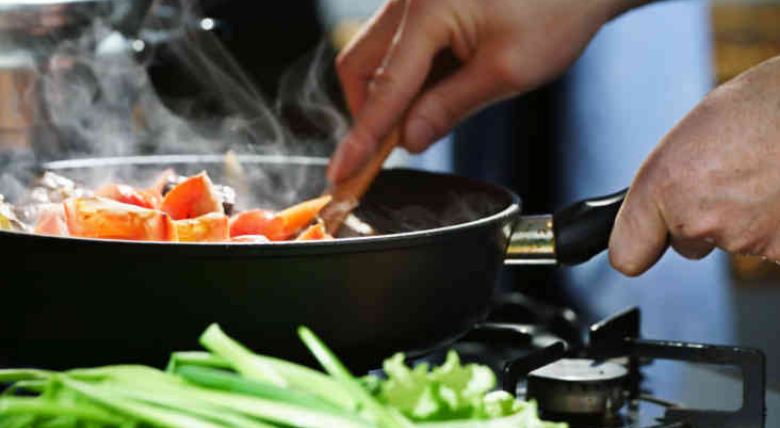
Pans used for frying (also known as saute pans) are a must-have in any professional kitchen. These pans have a unique form combining the conventional round shape with relatively high, gentle slope sides, making it a perfect pan for frying, scrambling, stir-frying, or searing. Frypans are sold in various metals that conduct heat and come in sizes, with the eight, ten, and twelve diameters being most popular in the industry.
Considerations When Buying a Frying Pan
When picking a frying pan that fits your purposes, consider the materials, pan width, and handle type.
1) Different Materials for These Pans
Fry pans are available in various materials, coating, and handle styles. Companies have the perfect match for your commercial kitchen, whether you like non-stick omelette stations or natural look fry pans for searing. More info on the significance of selecting the suitable material for particular needs may be found in this cookware guide!
- Aluminium: Has high heat conduction properties and is resistant to rust and corrosion.
- Aluminium Coated Stainless Steel: Provides good temperature distribution, is induction-ready, and is rust and corrosion-resistant.
- Anodised aluminium with a hard coat provides good conduction and is wear and dent resistant.
- Stainless steel/aluminium: Provides good heat flux, is induction-ready, resistant to rust and damage, and is dishwasher safe.
- Copper/Stainless Steel: Provides good heat transfer.
- Carbon Steel: Excellent heat conductivity and induction compatibility.
Magnetic materials, including steel or iron, make induction-ready cookware. Unlike traditional cooking methods, where the cooktop generates heat and is then transferred to your kitchenware through contact, inductive cooking uses magnetic energy to heat the cookware directly rather than the cooktop. This translates to faster heating, lower energy usage, and a healthier kitchen.
2) A Fry Pan Stainless fry pan bottom thickness
Aside from the composition, consider the width of such fryers you’re purchasing. But how would you determine the thickness of something? Cookware thickness is usually measured in gauge or mils but understands these measurements. A mil is equivalent to one-thousandth of an inch; hence the higher the mil, the thinner the metal. On the other hand, the gauge works in the other direction: the more critical the indicator, the more refined the metal. The kitchenware you’ll come across is mainly made of either thick 10-gauge metal or thinner large-bore steel.
3) Different Types of Handles
Consider using stainless handles pans that do not conduct heat as efficiently as aluminium handles and keep the pan cooler. Alternatively, seek metal clasps that have been hollowed out in some way to provide a cooling effect. Silicon or Cool grips are other good choices since they offer an excellent grip for any use and can be removed for cleaning. However, sure silicone knobs are not intended for high usage, and you may need to utilise a pot handled attachment to keep your business safe.
5)Frying Pans: Non-Stick” versus “Natural Finish
Nonstick and natural look fry pans offer a wide range of cooking options in your kitchen. Depending on your needs, a smooth fry pan may be sufficient for preparing your menu options. Non-stick pans have several advantages that make them a favourite choice among cooks.
Benefits
Non-Stick
- Aids in the prevention of food sticking to cookware.
- Cleanup is made easier and faster.
- Cooking with oils is no longer necessary.
- Eggs, pancakes, omelette stations, and other sticky products work well.
Finish: Natural
- Good at searing meat at a low cost